

CHAIR YOGA FOR DESK JOBS, PART 1: WAKING THE SPINE WHERE YOU SIT
There’s a moment, usually around hour three of back-to-back calls, when you realize you haven’t really moved. Not walked, not stretched, not even shifted much in your seat. The body has been quietly present while the mind did all the traveling.
The good news is that you don’t need to leave your chair to come back to your body. You just need to use it differently for a minute or two.
This is the first of a two-part chair yoga series built entirely around the one piece of equipment every desk job already has: the chair itself. No mat, no space, no change of clothes. Just five poses that undo the specific damage of sitting — starting with the spine.
1. Seated Mountain Reach
How to: Sit toward the front edge of your chair, feet grounded. On an inhale, sweep both arms overhead, palms together or shoulder-width apart, and let the gaze tilt gently up and back. Feel the stretch travel from your fingertips down through the side body.

Why it matters: This is the simplest possible reversal of the hunch. Every hour at a keyboard pulls the chest inward and the shoulders forward; reaching up and back does the opposite.
• Lengthens the intercostal muscles between the ribs
• Expands lung capacity for a fuller breath
• Quietly energizing — counters the afternoon slump better than a second coffee
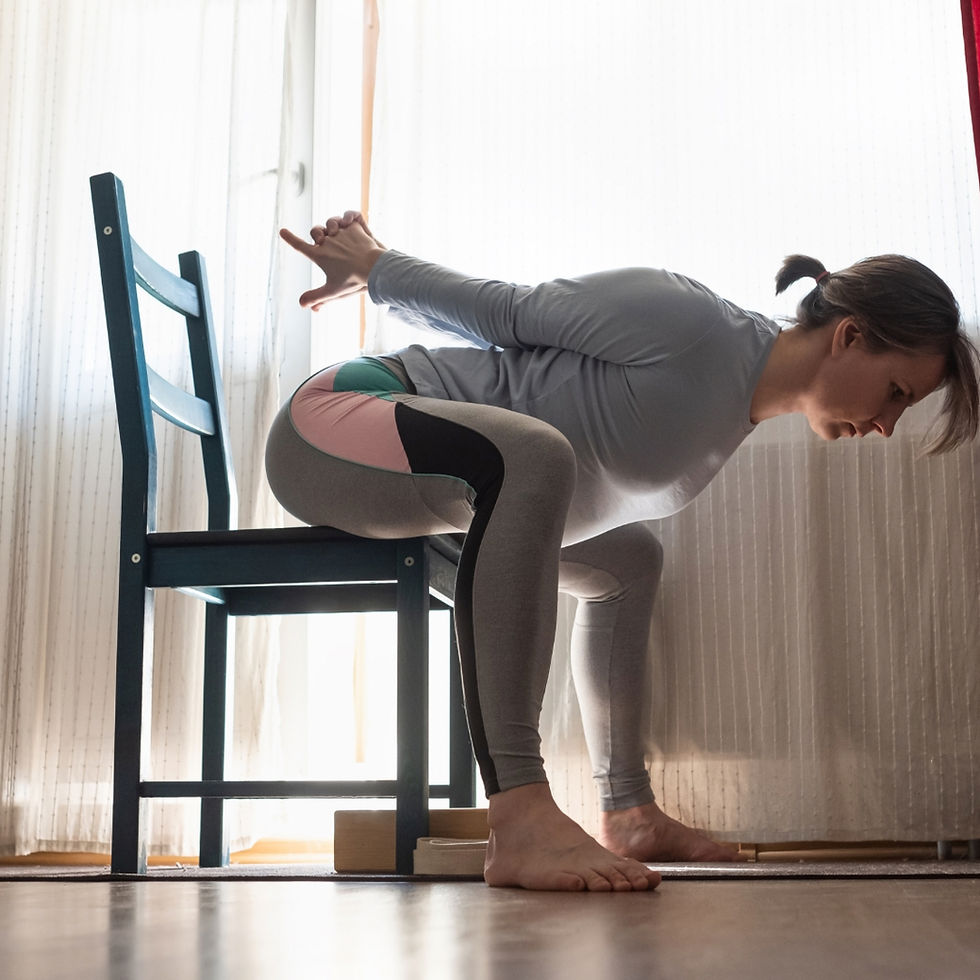
2. Chair-Edge Forward Fold
How to: Perch on the front edge of your chair, feet a little wider than hip-width. Hinge forward from the hips, letting your chest come toward your thighs and your hands reach toward your feet or the floor. Let your head hang heavy.

Why it matters: This pose does two things a desk day never allows: it flexes the hips in the opposite direction from sitting, and it takes the head below the heart.
• Calms the nervous system
• Stretches the hamstrings and lower back
• Relieves the two areas that file the most complaints after a long day in a chair
3. Seated Forward Curl
How to: Sitting on your chair, bend forward and curl your torso over your thighs, clasping your hands underneath your shins or ankles. Let your back round completely and your head drop.

Why it matters: Think of this as a seated child’s pose — a full release rather than a stretch with an agenda.
• Decompresses the vertebrae one by one
• Relaxes the muscles along the spine holding “good posture” all day
• Offers genuine rest disguised as a stretch — reach for this one when you’re tired, not just stiff
4. Seated Gate Stretch
How to: Sitting sideways on your chair with one leg extended out to the side, reach the same-side arm up and over toward the opposite side, letting your torso lengthen into a side bend. Anchor your other hand on the chair or your thigh for support.

Why it matters: Side stretches are the most neglected direction of movement in a desk day — we flex forward constantly, but rarely bend laterally.
• Opens the intercostal muscles and whole side body
• Frees up breath in a way you don’t notice until it’s back
• Reaches the often-ignored obliques
5. Seated Twist with Lifted Leg
How to: Sitting tall, lift one knee toward your chest and thread your forearms around it, clasping your hands. Let the lift and the twist happen together, spine staying long.

Why it matters: This combines a hip flexor release with a gentle spinal rotation — two things sitting quietly stiffens at the same time.
• Releases the hip flexors
• Adds a gentle spinal rotation
• Engages the core to stabilize the lift — a complete reset in one shape
Before Part Two
These five poses are enough on their own — a full seated sequence that takes maybe five minutes and needs nothing but the chair you’re already sitting in. In Part 2, we’ll go a little further: standing and kneeling variations that use the chair as a prop rather than a seat, for the days when you have a few more minutes and want a deeper release.
For now: try one pose between meetings today. Notice what your spine has been asking for.


Comments