

CHAIR YOGA FOR DESK JOBS, PART 2: USING THE CHAIR AS A PROP, NOT JUST A SEAT
In Part 1, we stayed seated — five poses that work with the chair exactly as it’s meant to be used. This time, the chair becomes something else entirely: a support, a ledge, a prop to lean into rather than sit on.
These four poses ask a little more of you — a few extra minutes, a bit more space, maybe bare feet — but they reach places the seated poses can’t. If Part 1 was about waking the spine, this is about the hips, the shoulders, and the parts of the body that a chair, by design, keeps folded all day.
1. Chair-Assisted Squat
How to: Stand facing away from your chair, feet wide, and lower into a squat until you’re resting lightly on the seat. Clasp your hands behind the chair back and let your torso fold forward, head relaxed.
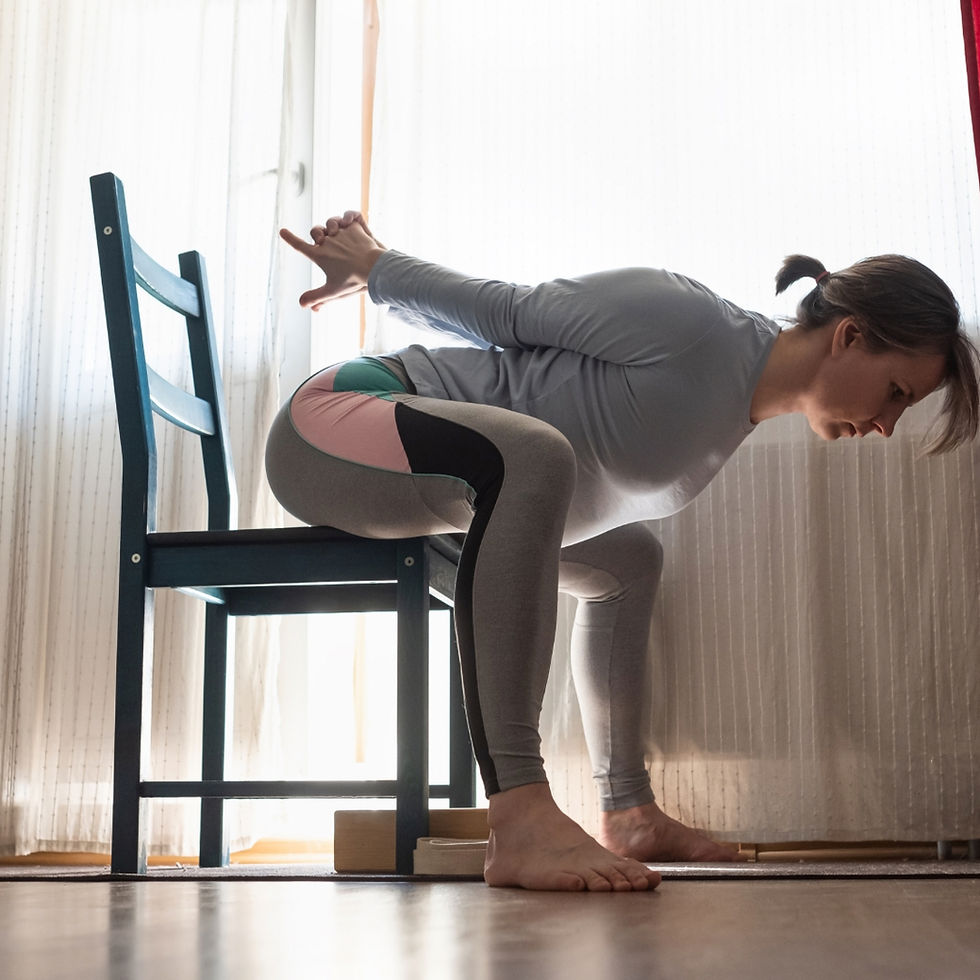
Why it matters: The squat is one of the most natural resting positions for the human body, and one of the least available in a chair-based life.
• Opens the hips and groin
• Releases the lower back
• Gently tractions the spine forward, with the chair taking just enough weight to make it sustainable
2. Supported Extended Child’s Pose
How to: Kneel in front of your chair, hips low toward your heels, and extend your arms forward onto the seat — or onto a block placed on the chair for extra height. Let your chest melt down and forward.

Why it matters: Extending the arms further than a floor-based child’s pose allows adds real length through the lats and shoulders — the muscles most compressed by hours of reaching forward to a keyboard.
• Lengthens the lats and shoulders
• A genuinely restful shape — you can stay longer without your shoulders bearing weight
• Works as much as a nervous-system reset as a physical one
3. Chair-Assisted Backbend
How to: With one knee resting on the chair seat and the standing leg grounded, let your chest lift and open, one arm reaching back and down for a gentle backbend. Move slowly and only as far as feels supported.
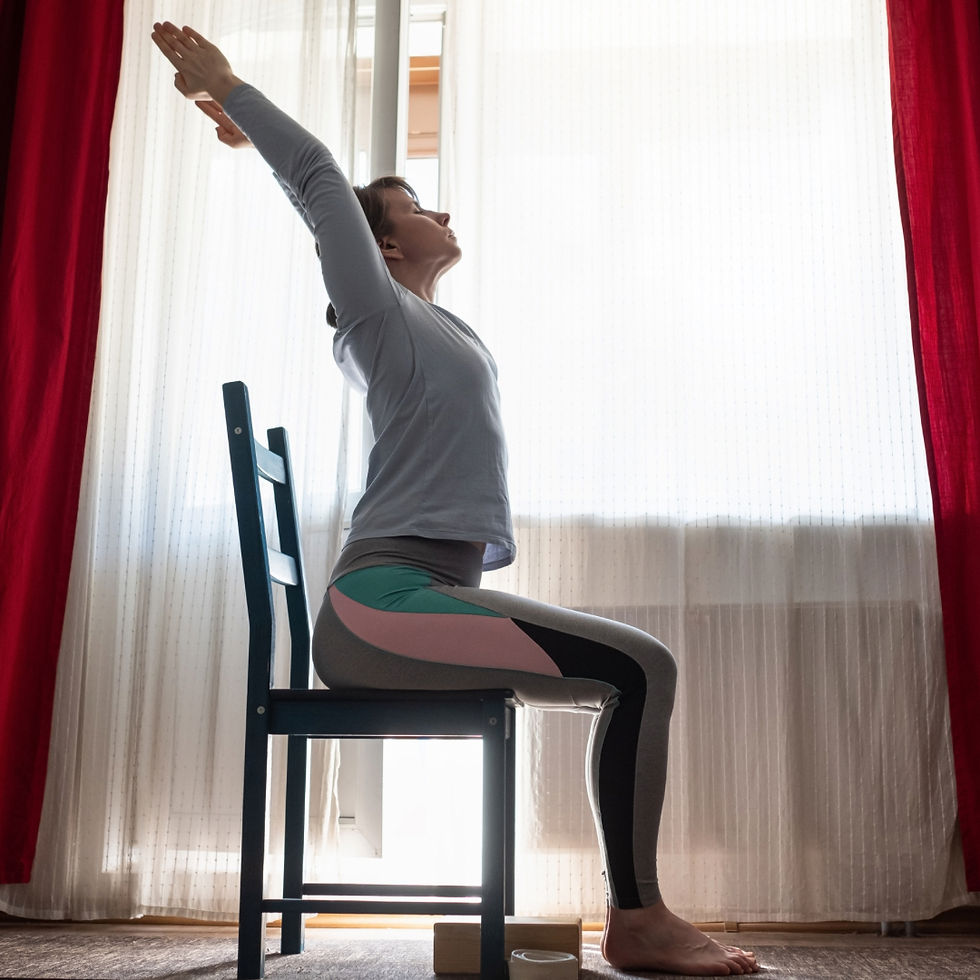
Why it matters: This is the pose most people’s bodies are quietly starving for after a day of forward-folded typing.
• Opens the chest and front of the shoulders
• Counters the kyphotic curve that desk work encourages
• Tends to leave you more alert than before — go slowly, the chair is support, not a signal to push deeper
4. Standing Forward Fold with Chair Support
How to: Stand a stride’s length from your chair, hinge forward from the hips, and rest your forearms or hands on the seat. Let your spine lengthen and your head hang between your arms.

Why it matters: Using the chair as a ledge rather than folding all the way to the floor makes this pose accessible on tight hamstrings and gives the lower back genuine support rather than strain.
• Lengthens the entire posterior chain — hamstrings, calves, spine
• Brings the same calming, blood-flow-reversing benefit as a full forward fold
• Requires far less flexibility than a floor-based version
Putting It Together
Between the two parts of this series, you now have nine ways to meet a stiff body without leaving your desk setup behind — five that need nothing but your chair as a seat, four that ask you to see it as something more.
You don’t need all nine in one day. Most days, one or two will do — whichever direction your body seems to be asking for. That’s really the only instruction that matters: notice what feels tight, and move toward it, even for thirty seconds. The chair was already there. Now it’s doing more.


Comments